DC WORLDS COLLIDE.
08/22-12/25.
Key Art for DCWC.
As Art Director on DC Worlds Collide, I set and drove the game’s artistic vision from early concept through final delivery.
I led a small team of 11+ artists and external partners, providing clear art direction and actionable feedback across all artwork. We worked closely with DC Comics through regular communication and reviews to ensure strong brand integrity across every visual asset.
I partnered with production on resourcing and roadmap planning to support our art pipeline. Throughout development, we collaborated cross-disciplinarily with product and design to create an experience that was both fun and engaging for players. Additionally, I would provide assistance and feedback to our marketing teams.
This page is organized to provide insight into key areas of the art pipeline and how the work came together under a unified visual direction.
Art Pillars for DCWC.
Logo reveal trailer I put together in After Effects for a team presentation.
logo creation.
I partnered closely with the Marketing team to redesign the DC Worlds Collide logo, giving it a fresh new look for the game’s worldwide launch. Our goal was to introduce a new mark that aligned with the game’s release and felt emblematic of a new chapter for Worlds Collide. We focused on creating a logo that was dynamic, highly legible, and strongly rooted in the DC brand.
3d models: Moodboards TO 3d.
Creation Process- From exploration, to feedback stage after direction has been chosen, to final delivery.
Every character began with mood boards and would make its way through exploration and concept phases before reaching final 3D production. I would create mood boards and hand them off to our concept artist to use as a foundation for design. Character Design was largely inspired by the comic book versions of our characters. Over the course of our time on DC Worlds Collide, we had completed and received IP approval for over 80 character concepts.
Examples of our 3D characters in DCWC.
Example of Concept to 3d pipeline.
Concept Examples.
3d model Feedback Example.
Example of Zbrush feedback during modeling phase.
animations and vfx.
Compilation of some of our character’s abilities.
The team delivered high quality animations and VFX for DC Worlds Collide. We focused on strong character posing and dynamic movement to help create an immersive experience. Stylized, over the top VFX elevated the visuals and helped make our characters feel powerful, expressive and authentic to the brand.
DC Worlds Collide provided great opportunities for fun, playful animations that showcased each character’s personality. Brainstorming and exploring how characters would behave on the look-in screen was a highlight of development and helped bring their personalities to life.
Mood board creation was a highly collaborative process between our Lead Animator, Creative Lead, and myself. We drew inspiration from a wide range of media, while always grounding our work in the DC Comics source material. Authenticity was a key focus throughout animation development, with the goal of ensuring each character looked and felt true to their DC Comics counterpart. Working with the VFX team every step of the creation process was such a rewarding experience and the interactions we had at our Dailies helped push the quality of our visuals. Images above our examples of the animation pipeline, from mood board stage to final in game version.
More examples of the animation pipeline. In these two examples, I was responsible for the rough pre-vis that helped guide the development of these two different abilities.
Illustrations.
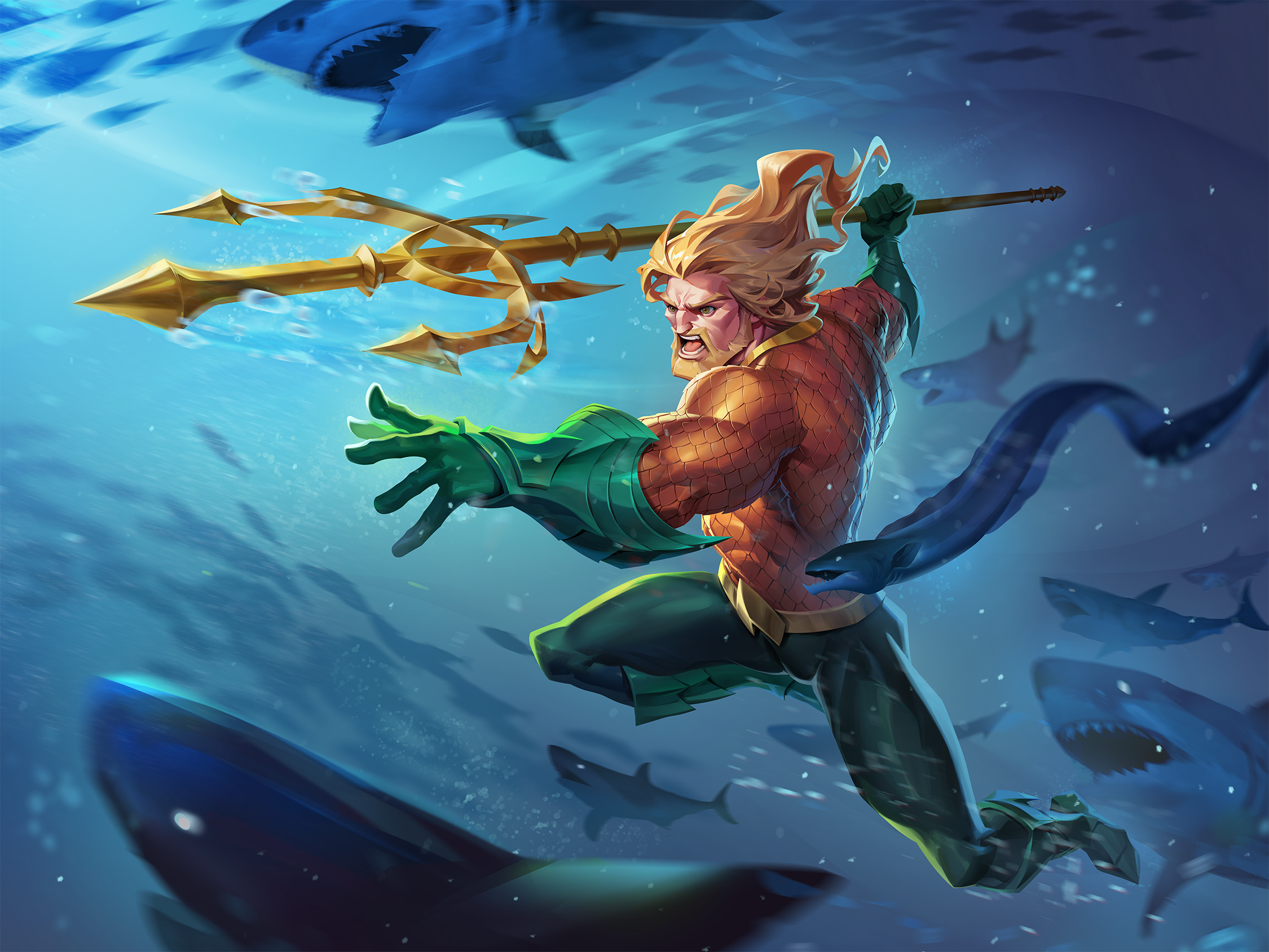
Examples of some of our Legendary character illustrations.
Illustration was a major part of the pipeline on DC Worlds Collide. Throughout development, illustrations provided another opportunity to showcase character personality and expression. These assets were multi-use and leveraged across multiple areas of the game, including marketing materials. Each character and reinforcement featured a unique illustration, resulting in over 70 illustrations created during development.
Illustration Pipeline — Mood boards → thumbnails → feedback → final render. Concepts were developed collaboratively with Creative Lead, with a focus on highlighting character lore and delivering dynamic compositions. Every step of the process overseen by our Senior Concept Artist and myself.
I worked closely with the UI/UX team on the creation of UI art for DC Worlds Collide. Collaborating with the UI/UX Lead and UI artist, we brainstormed and finalized mood boards to establish a strong visual direction. I provided final approval on UI art to ensure brand consistency across the game. The UI/UX team did an incredible job, producing hundreds of assets in support of our characters and game events.
UI.
Illustration Examples.
Examples of some of the UI assets generated for DCWC. Here you see ability icons, character badge iconography and character frames.
Click thumbnails below for other Art Direction Projects.